Giving the discerning dog owner the "upper paw" on the best products, nutrition and training tips.

Tuesday, June 3, 2014

Revisiting DIY: Make this ear solution YOURSELF!!

With Memorial Day weekend behind us and the temps heating up, we thought this was a perfect time to revisit this post!!


Cleaning your pup's ears is most likely NOT one of your favorite tasks, however, it is important and essential to good health.  With Spring upon us, those hot sweaty days will turn into prime ear infection season for your dog and you need to be prepared.

So, how do you go about this aspect of grooming and maintenance?  Do you use a cotton ear swab with soap and water...eeek we hope not!  Do you use pre-medicated pads?  A solution purchased from your veterinarian?  The possibilities are endless and there are thousands of products on the market, but in our opinion....NOTHING beats this homemade solution.

This is a powerful, yet safe solution, that will last you for months and ensure your pooch never gets another ear infection.

Ingredients:
1. 1 bottle of rubbing alcohol 16 oz.
2. Boric Acid Powder
3. Gentian Violet
4. Plastic bottle with applicator 4 oz. - 8 oz.

Step 1:

Pour the bottle of rubbing alcohol into your plastic bottle.

You can find these for $2 - $3 at any beauty supply store

Step 2:

Measure 2 oz. of Boric Acid Powder, approximately 2 tablespoons, and add to your alcohol.  

You can purchase at your local drugstore or online.  A 6 oz. bottle should be around $5


Step 3:

Add 8-10 drops of Gentian Violet to your solution and shake well.
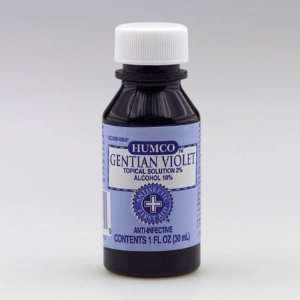
Like the other ingredients, you can order from a drugstore pharmacy or reputable online source.  The price should be around $6 for 1-2 oz. bottle.

Did you know?  Both Boric Acid Powder and Gentian Violet are powerful antiseptic and anti-fungal agents used in many of our everyday products.

Step 4:

You final solution should have a lovely dark lavender hue and look something like this...


Add a small squirt of the solution into your pup's ear, massage and allow to sit for a few minutes.  Then take a gauze pad to clean out the gunk.


This is the only ear solution I use to clean my dogs' ears and I have never had another ear infection since we incorporated this into our routine.  The ingredients are easy to find and the solution is so simple.

We hope you give this DIY remedy a try!

Love,

A & A

Sunday, May 18, 2014

Caring for Canines as a Community

Anatolian Shepherd mix in Alacati, Turkey

It's been awhile since our last post.  We have been out of the country on vacation for the past several weeks traveling throughout Turkey and Greece.  During our travels, I was surprised to see how many dogs were roaming the cities and villages, especially in the bustling metropolis of Istanbul.  Everywhere we went there were dogs lounging in cafes, peacefully meandering about the streets, and being fawned over by tourists and locals alike.  Most, if not all, seemed to be remarkably healthy, groomed, and socially well-adjusted.  This is in stark contrast to what we see here in the United States, so I decided to learn more about the dogs of Turkey and how they differ from the dogs living in the U.S.

Neighborhood dog in Alacati, Turkey
He joined us in the cafe to hang out

Here in the United States, we have around 13,600 animal shelters.  Of which, about 7.9 million animals enter each year and approximately 2.7 million are euthanized (aspca.org).  These numbers are staggering and create a polarizing issue here at home.

In Turkey, there are very few animal shelters due to infrastructure and economic challenges.  This results in a high number of free-roaming dogs; which could cause major health and safety concerns…or at least one would think.  In Istanbul, it is estimated that there are approximately 150,000 stray dogs roaming the streets and living peacefully among their human counterparts (animalbehaviorassociates.com)

So, what is different about these Turkish dogs?

A few years ago, rabies was a big problem among free-roaming dogs and the government instituted regulations requiring cities and villages to address the issue.  As a result, there has been a major effort to spay, neuter and vaccinate all stray dogs.  This is evidenced by ear tags and collars on nearly every dog you see.  This initiative has drastically reduced the number of reported rabies infections and allowed dogs to live a healthier life.

Cesme Peninsula, Turkey

In addition to the spay/neuter/vaccinate initiative, culture plays a large role in how dogs exist in the community.  Many Turkish citizens enjoy having the free-roaming dogs and care for them as a neighborhood.  We saw several dogs that seemed to have multiple "owners" as we would see shop keepers brushing, feeding, and caring for their canine friends.  Turkish society is also against euthanasia as a method of "population control" for otherwise, healthy animals.

Sunbathing in front of the Blue Mosque

Receiving some love from a tourist

Back to lounging
It is hard to say what the best resolution is for caring for all of the animals in our world.  I am inspired and warmed to see the relationship between man and dog in Turkey and perhaps we could learn a little from their approach.

Love,

A & A

Monday, April 7, 2014

Health 101: Veterinarians - Holistic vs. Traditional?

Photo courtesy:  www.speakingforspot.com
In thinking about how we approach living a healthier lifestyle, there are so many different opinions and suggestions on how best to achieve optimal health.  Some believe a holistic or integrative approach is best and other look for a more traditional western medicine approach.  Both of us work in the healthcare industry and are intimately involved with how a healthy lifestyle impacts us.  We also both have dogs at different life stages.  The health needs of a senior dog are very different from that of a 2-yr old pup.

With that in mind, this past year we have had more trips to the veterinarian for our 10-yr old Japanese Chin, Joey, than in any other year prior.  Although, we are fortunate he has been very healthy his entire life, he has experienced some significant health issues this year...many due to him aging.  So, as a way to ensure we are providing Joey the best care; it is essential for us to be informed about our options and treatment plans.  As part of this information gathering, we find ourselves asking...do we take a holistic approach, traditional medicine approach, or a combination?

It may be easier for us to clarify the difference between holistic veterinary medicine and the traditional veterinarian.

Holistic veterinary medicine, also known as integrative or alternative veterinary medicine.  It focuses on utilizing natural and homeopathic treatments in lieu of pharmaceutical and diagnostic therapies used in traditional western veterinary medicine.  Holistic veterinary medicine has a goal of looking at the animal as a whole and using minimally-invasive techniques to enhance the animals well-being.  Common integrative medicine treatments are acupuncture, herbal remedies, organic diets, massage therapy, and nutraceutical incorporation.

Photo courtesy:  www.chatfieldvet.com
Acupuncture can also be helpful for your pooch!

Traditional veterinary medicine focuses on incorporating common and conventional medical practices that have stemmed from academic,evidence-based institutions.  Traditional veterinary medicine incorporates pharmaceutical therapies, diagnostic testing (x-rays, EKG's, and MRI's), surgical intervention, and focuses on a specific diagnosis.

Photo courtesy:  www.scientificamerican.com
Recently, our dog, Jack, had to receive an MRI so we could probably diagnose his invertebral disc disease

In summary, both of these approaches to healing have the same goal of treating, curing, and promoting optimal health for our pets.  Advice from many veterinary experts supports a combination of both schools of thought.  If your dog is suffering from a non-life threatening ailment, then a less invasive, holistic solution would be best to try first.  If the health issue is more severe and has a potential life-threatening risk, a more invasive approach would be the best.

Happy Healing!

Love,

A & A